The farmer loans waiver

February 29, 2008

Some points which come to my mind:

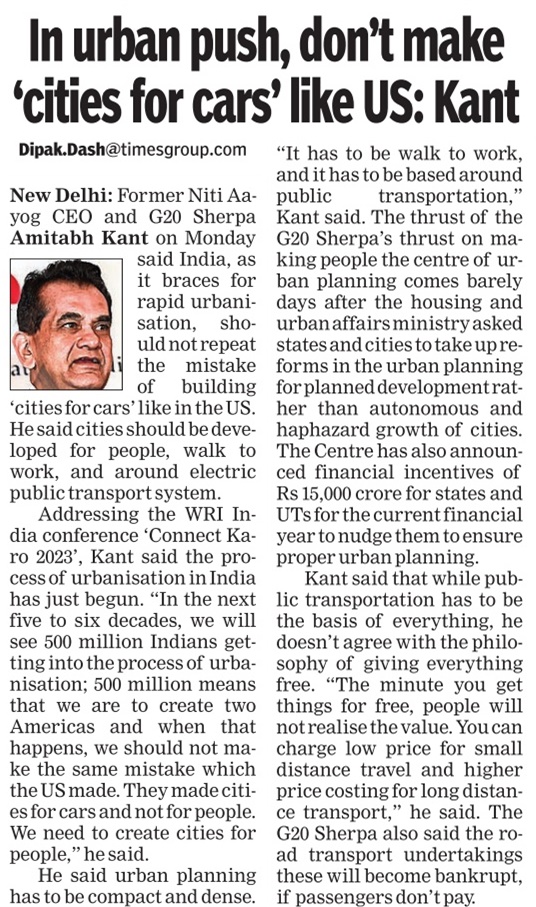
Point 1) Almost every where I hear that the waiver will bring disposable income into the rural sector. This extra income will then according to people like Rahul Bajaj encourage people to spend on goods like two wheelers thus boosting the economy. Others say people will spend on FMCG and food. But where is the money? The fact that a loan has to be waived of means that the farmer took a loan to buy seeds, fertiliser, pesticide and other assortments to carry out farming. Say Farmer A took one lac rupees as a loan from and SBI branch in rural India. He tilled his farm and expected that within a period of a few months he will have a bumper crop, which he will then sell at a good price. He will then pay of the loan from the income and keep the rest of the money for himself. Since there is no tax to be paid he has all the balance money to himself.

Now as opposed to this what has happened is that either the crop failed or the markets didn’t offer a good enough rate. As a result the farmer has no money to buy food far less pay back the loan. Well he makes some attempts, pays an installment or two and then starts defaulting. So the SBI branch is then saddled with recovering a one lac rupees loan.

Point 2) Now the Finance Minister has waived of the loan. What does that mean? Is he giving one lac rupee to Farmer A to the farmer to go and buy a two wheeler and splurge or is he foregoing him from the burden of paying back any money.

Point 3) Now there could possibly a situation where Farmer A took the one lac and didn’t spend a rupee to buy the stuff listed in point 1) for his farm. He was an un ethical farmer. He decided to go ahead and splurge on liquor and those other things. When the time to repay came he expressed his inability citing the world economy and all those things. Now when the Finance Minister announced the waiver what happened? Why should the unethical Farmer A be happy. He hasn’t got one more lac to blow? All that has happened is that he need not worry about suffering for his profligacy. But then he isn’t exactly having any more money for more liquor and all those other things or is he? For a moment if I consider than no he is actually getting money also then too how long does that much money last?

Point 4) So the bottom line in my limited understanding is that the 60,000 crores being waived out is money which has already been consumed in the economy in terms of seeds, fertilisers, pesticides or liquor and other things. It is not new money being introduced into the economy. So where is the expenditure push to the economy?

Point 5) In fact, 60000 crores having to be waived of means that funds are being used for unproductive and inefficient uses in the economy. That same money could have been used for the ladies running the Anganwadi scheme or for teachers or for health.

Point 6) And finally a journalist friend from the Amravati district of Maharashtra which has been in the news for its farmer suicides tells me that the whole thing is a hoax. No body is verifying who the people committing suicide are? Is it for farm productivity related issues or even over a loan that they have taken? Or is a random suicide arising out of errant social behaviours. And are these being clubbed together under an agricultural crisis and thus being utilised to get waivers and handouts. And then the famed politician-burecrat nexus of the country (the famed one which ensures that out of every development rupee only 15 paisa reaches the actual benificiary) mops up all the funds?

Point 7) The real changes which are required in the agricultural sector dont seem to be addressed at all.


Burrabazaar fire, Calcutta

January 13, 2008

The Burrabazaar fire is interesting. Having been involved with disaster management at Mumbai Helpline in 2007 the following thoughts instinctively came to my mind in order of occourence:

1) Same old story. Old area of the city. Traders wouldn’t care much. They will not spend one crore on installing fire safety equipment and other measures but will then suffer damages worth hundreds of crores.

2) Its so ironical that the Ganga with all its water is just a kilometer from the site and yet there was not enough water to handle the fire. Again a complete lack of any foresight during peace time when everybody is busy making the crores.

3) I come to my pet whipping horse – cricket. everybody in the market would have had enough time to discuss that stupid tamasha called India cricket and watch it during office hours also but not enough time to apply their minds to planning for safety.

4) After the initial thoughts my mind started brewing conspiracies. A lot of such fires also take place to destroy incriminating documents. Being a business place these could pertain to excise or income tax evasion.

5) Could there be a real estate angle to the matter? Is some real estate group eyeing the place.

I would like to be in touch with anybody from the traders association in Burra bazaar and discuss their viewpoints in detail on the same. If possible I am willing to lend my services for developing some plan in the future.


Morbi

January 12, 2008

My New Year started of to a hectic travel schedule over 2 cities and a town. Was at Baroda, Ahmedabad and Morbi. While it was great seeing all the 3 places – my first detailed one – it was Morbi which was most fascinating. The place is India’s Ceramic and Tiles Special Economic Zone (SEZ). I consider myself a brand aware person and was stumped to see the whole of the National Highway 8 -A lined with billboards of only one industry – ceramic and tile manufacturers. Every possible name with the correct and incorrect spelling and permutations was put up.

The junction where you break of from the Ahmedabad – Rajkot stretch of the NH – 8 leading to Morbi is called NH-8A. The initial part of the route is idyllic and rustic. Low hills, shrubs and some trees, with a very nice lake in the initial stretch. Then after 20 minutes or so the landscape starts changing drastically. You feel the energy and the activity. The place becomes increasingly dusty and labourers can be seen in groups.

I was visiting Morbi to help address an industry issue which the ceramic industry is facing. In the bargain I got to travel a good chunk of the industrial belt in the comfort of a car with somebody to drive me around.

The one thing that caught my attention during the nearly 3 hour trip was the ridiculous state of the basic infrastructure. The power and the water and raw materials for production are there but where are the roads, drainage and waste disposal systems. Same story every where in India. It is amazing that the industry doesn’t consider at least roads as a very integral input. Heavy trucks laden with raw materials and finished goods go heave-ho plunging into a large pothole, getting out and going in again, all on a single lane with 2 way traffic. Amazing. At least the waste water and solids one can understand that th industry wouldn’t care much about but the roads are very much a selfish interest. Their Honda Accords and Corolla’s go through the same!

The person driving me had the same sense of excessive pride in his town – it will beat Mumbai one of the days. When I spoke to him about the environmental problems he chose to be silent, only murmuring but that will happen, why fret?

Forget the physical environment, it was the condition of the labour which was really disturbing. One cannot believe that this is the same resurgent India which is almost violently boastful of India’s prowess in the popular media. It being January the area was very cold and returning in the evenings seeing the labour going about their balance of life was really saddening. Do these guys have minimum wages, medial facilities, insurance, decent housing. The public transport is dependent on the rickety auto rickshaws which also cater to the office category people. The few times I took a rickshaw there was always a relieved labourer or two who would jump into share the front seat with the driver for a Rs. 5 flat fee. Its prohibitive to take the rickshaw alone and there may not be sharing possibilities when you want to go.

The residential areas were shabby and congested. Untreated effluent or sewage fills all the drains and streams and ponds. Pigs roam about. And all amidst some of the finest names supplying sanitary ware to the country and for export. Incredible India.


A reality check Mr. Correa and Mr. Parekh?

October 28, 2007


Dear Mr. Correa,


There are some serious flaws in arguments raised in your interview in DNA 28th October, 07 and I thought it necessary to react to the same.


Of particular interest was the para below:


Of course there is no sense endorsing indiscriminately every new development. Any proposal must be studied. But this has to be done intelligently, keeping in mind the broader issues involved. Unfortunately, nowadays this is very seldom true. People are accepting at face value pronouncements made by self labeled ‘greens’ about environmental concerns, in some cases, regardless of their total lack of experience or training, or intuitive insight into the complex problems.


I must say at the onset that I am not personally offended by your comments. It’s just the sweeping-ness of it that upsets me. There is an element of truth in your comments but you are not able to hit the nail on the head because either you choose to be diplomatic and polite and lazy taking the easy way out – or maybe you really don’t know a lot of things(in which case you shouldnt comment). There certainly is a threat from environmentalists who are doing far less than they are made out to be and from another section of environmentalists whose behaviour has become so dangerously compromised that some in the development lobby liken them to extortionists. Also I would like to invite you and Mr. Parekh and others to some of these areas which are being proposed for reclamation. Attaching the picture of one such area in the end.


Also I say a bit breathlessly that there is a lot more to the city than Marine Drive.


Don’t you think that what you are saying in the above para is so enormously self-contradictory? Most of the allegations you make against self labeled ‘greens’ are actually truer for Ivy League trained ‘experts’ like you. Has it not become one of the fundamental tenets of developmental policy and urban planning to be inclusive in a manner which involves all stakeholders? As opposed to being driven by a few vested interests and driven primarily by greed. Shouldn’t ‘renowned urban planners’ like you be taking the lead in involving the ones who are far less educated than you and have ‘less intuitive insight’ into complex problems? How much of that is happening in Mumbai as compared to some other cities arund the world case studies of which you would know by heart. Whatever happened to carrying capacity, density requirements, per capita open space, super crush loads and so on?


And some of these less-educated-than-you are the greens who have been sprouting across the city. The issue of reclamation is less of an environmental and more of a governance issue. You should take time out to understand the import of developments like the 73rd and 74th Amendments to the constitution. Many of your ‘planning and development experts’ (including some environmentalists) – which ironically also include politicians whom we have clearly come to see as corrupt and compromised coterie don’t seem to understand it well.


I was a Project Officer at Bombay First from 2003-2005 and got a good ringside you of the likes of you, Mr. Parekh, organizations like Bombay First and the general planning coterie. Don’t try to make me believe that people like you and Mr. Parekh or hollow and completely compromised and unethical organizations like Bombay First have some great intuitive insight into Mumbai’s problems. In my opinion you are certainly a bit over hyped about your contributions to the city. You don’t have much of a clue about the city’s needs and anyways spend most of the time touring the world. Since you don’t stay here and don’t bother to study or experience in detail the problems people go on an ongoing basis (besides just housing) I don’t think you should make sweeping comments. If you could only help in impacting some of the organizations and committees you are associated with that would be good.


I saw the Citizens Action Group being formed and the various committees being formed after the Vision Mumbai Report and know what a shallow and stage managed exercise it was. A lot of what went on there had no comparison to the ‘face value pronouncements made by a few self labeled greens’. A lot of those concerns at least don’t have the huge agendas that drive these committees. What the city needs is genuine sustained and in depth (as opposed to superficial) dialogue between various stakeholders and I don’t see the planning experts exerting themselves sufficiently in that direction. I dont think even the environmentalists are doing it but the paucity of resources – of the kind available to the organised and state sponsored planning community – is a very real issue.


In a large part this dilemma arises because fundamentally we are an undemocratic culture which has always been ruled by a few of the kings or the zamindar’s men. Staying in South Bombay or jet setting to world class cities doesn’t seem to erase that. I find it only getting exacerbated in the case of Indians. At the launch of the Vision Mumbai report itself I used to say what we need is a World Class mindset before we come anywhere close to a world class city. How much of that even Bombay First demonstrated is a shock. I wonder what you have to say about the competency of the current CEO of Bombay First about intuitive insight into complex problems.


The reason (and this is the most important point in my argument) that the pronouncements of a lot of greens sound hostile and unpalatable is because when any planning exercise regarding the development of Mumbai takes place what is not practiced is what you preach –“ Any proposal must be studied. But this has to be done intelligently, keeping in mind the broader issues involved.


Are you suggesting that Mr. Parekh or you or some others you may end up suggesting are intelligent enough to study the proposals? I don’t think so. The proposals will be passed through the CAG and some other docile committees and get pushed ahead in the ‘larger interest of the city’. Don’t you think the green pronouncements are keeping some broader issues in mind? I do think so. Various factions whether the poor or the greens are continuously left out of discussions on Mumbai’s matters and yet people like you make it sound as if the development sector is a victim and being harrassed by misled elements.


And the double standards are what have really defeated the whole planning process and created rifts between various social factions in Mumbai. The point of balance is difficult to find in such an atmosphere. Maybe a lot of reclamation is actually possible and maybe a lot of environmentalists would agree to these arguements if they were well researched and presented. But in the current atmosphere of secrecy and venal and greedy interests driving the arguements dont even consider the same happening.


Incidentally while I am not as trained and ‘degreed’ as you I consider myself sufficiently well educated to comment on Mumbai’s issues and am open to being further educated. I had plans to going to some of the Ivy League schools to better my intuitive insights but when I saw some of my peer groups doing one of don’t-use-plastic-bags campaigns, showing it in their CVs and pushing of to these colleges I felt I was better of doing serious grassroots work with even some wishy-washy greens. 


SWMppl01


June 15th 07

June 16, 2007

Pyramid Lake Water Authority

Musuem

Dip in the lake

Carina Black

Bureau of Land Management

Dip in the Truckee

Rock Show

News from Home


Visiting US on International Vistors Leadership Program

May 31, 2007

I have been selected as a participant for the International Visitor Leadership Program and will be in the US between 2–23 June for the program. Some more details on the program are available at the following link -

http://exchanges.state.gov/education/ivp/

Its pretty exciting and happened a bit to fast. The American Center had been in touch with me over the past 3–4 years regarding the program but the selection would not come through and then it finally happened! Will be posting here when I can.


No voting this time!

February 11, 2007

Instead of voting this time I ran around three differrent polling booths. The delimitation excercise saw my name being tossed around. Even then the names of my parents was there.

I had been very busy all January to go and check my name. Since my parents voting slips had come home delivered by the NCP I assumed that my name would occour serially at the same booth.

Should’nt the State Election Commision be putting up all the lists for viewing up on the internet? Instead of running around polling booths on final day I should be able to log in a month before and check my names. Intend to follow the issue with the SEC. Below is a link from Times and below that some pictures I got from a neighbouring slum. The kind of turnout was amazing.

http://timesofindia.indiatimes.com/articleshow/1552859.cms

election-1.jpg

election-4.jpg


Bombay First stop misleading the city and the world!

January 31, 2007

The recent visit of UK Secretary of State for Environment, Food and Rural Affairs Mr. David Miliband had some moments of serious concern. I happened to get invited for a dinner with the Minister and was till then unaware of his trip. On the day after the dinner on the 25th January did I realise the scope of the visit and the various programs that the Minister had participated in. The DNA report caught my fancy http://www.dnaindia.com/report.asp?NewsID=1076222.

It spoke of the breakfast meeting that the Minister had with Bombay First. The report left me infuriarated. Just the previous evening I was left mildly agitated with the course of discussion between myself, an official of the government of UK and Mr. Narinder Nayar, the Chairman of Bombay First. The discussion revolved around the topic of food processing since the visiting Minister also Food in his portfolio. The British person asked about what ails the system and whether contract farming is followed etc. Mr. Nayar showed his ignorance of the issue by speaking of how India lacks cold storage facilities and sophisticated logistical facilities and 40 percent of food is wasted every year. Neither the other gentleman nor I got any chance to speak much. I tried to put across that these were statistics which were thrown about nearly a decade back or at least till 2000. I used to be reading about these while researching about my economics projects. After that the country has seen enormous change. I did a bit talking of how there has been considerable change with cold storage and processing. Just the example of McDonalds is good about how best practices have been adopted by the rest of the sector.

As is the way with dinner meets soon enough there was a change of partners and we were all speaking to others. I have never liked this particular habit of a lot of Indian’s of trying to gain sympathy from Europeans and Americans by going out of the way to show what all is wrong with the country – even when it is not true like in this case – and was left with a bad taste. This habit is a bit too prevalent I must say in the Independence generation.

Coming to the DNA report of the breakfast meeting. I don’t know who the other participants were but can hazard a guess as to some of them being the same old self obsessed cronies who always hold the mantle of the crumbling, facade of a Think Tank that Bombay First is. I was a Project Officer at Bombay First for two years and have enough understanding of their processing power and ability to understand the city’s problems and participate. It is one of the city’s biggest scandals – much bigger than most of the corruption scams in government – that such an un-meritocratic institution represents itself as the vanguard of Civil Society of Mumbai and is presented before visiting delegations of World Bank and whosoever would drop in from the world.  No doubt the article mentions that at one point the participants were left wondering whether Bombay First was representing Bombay or David Miliband was! This was exactly the feeling I – and many others – would be left with while I was there.

I think it is a matter of grave concern and high time it was looked at with seriousness by everyone. At a time when co-operation and working together is the need of the hour the atmosphere gets tremendously vitiated by this kind of experiences. With all due respect to Mr. Nayar and Bombay First the fact remains that Bombay First does little original thinking and remains far removed from the city of Mumbai. Being geographically close to Mantralaya and sitting on official government meetings has given Bombay First the illusion that it knows best. The mandarins in Mantralaya also have cultivated Bombay First for a good reason.

In all this gaming its only the city’s urban management problems which are suffering. Some get a good ego massage, others have some narrow purpose served and there is hardly any serious thinking and analysis on the city’s issues. It is this fundamental anomaly which needs to be corrected first before we worry ourselves silly with what to do about the issues. We cant fight a battle with a fragmented army which itself is engaged in turf battles.

The management of Bombay First gives me the impression of being from that same conceited breed of Indians which over centuries has betrayed the country. Even most foreigners end up doing more good to this country than these (and those more notorious) sons of our soil. Aided by a a cunning and completely self serving establishment Bombay First has been propped up as a representative of the city at the neglect of more deserving representatives. And all with a deliberate purpose of creating confusion.

The specific issues mentioned in the article as discussed in the round-table were mass transportation, waste management and slums. All issues of which Mr. Nayar has little understanding but one’s on which he will keep speaking till the cows come home. While the rest of the city keeps giving its hand at trying out various creative interventions Mr. Nayar remains fossilised with some few statistics and opinions on Mumbai and India that he held – and maybe which were true then – in 2000–01.

I  feel depressed and demoralised with his self-deprecating and completely shameful manner in which he always will talk about the city’s waste problem and run after foreigners for solutions. It is indeed a scandal that other more knowledgeable people who put their day and night in offering solutions and are silently bringing about a change hardly interact at such forums and a few completely unrepresentative candidates do all the speaking and representation on behalf of the others.

And the ironical and completely embarrassing part is when the foreigners on the other side are more knowledgeable and are left completely confused and uncomfortable by the fact that here is a person who is the Chairman of the city’s ‘premier’ Think Tank and knows little. Same is with Mass transportation on which from what the article speaks Mr. Nayar did a complete foot in the mouth!

The fact remains that for most of the time Mr. Nayar travels in an air-conditioned car from Malabar Hill to Nariman Point and then a couple of meetings and functions of South Mumbai. That certainly is not enough to know enough about mass transportation. In the past few years anyways he has been spending more than half the year in the US and Europe where also I am not sure whether he uses mass transportation. Something of this sort can only happen in a society which is still very unrepresentative and runs on aristocracy.

There was talk about disposing of old cars and bringing in Euro standard compliant cars? Mumbai has been seeing reduced pollution levels since 2000. Disposing of old cars was something discussed in the late 90’s when we still had old Fiats and Maruti 800 roads. Has he missed the great automobile explosion - with newer more compliant cars coming in everyday? The challenge today is not disposing old cars but in being able to gauge the public and political mood towards fiscal disincentives on people getting cars and consequently choking up our roads! Something Bombay First will avoid by a barge pole!

And what about CNG which last year saw its consumption beat that of diesel and petrol in the city. And where ever in the world do cars get talked of as mass transportation in the world. I am not surprised that the Minister looked perplexed. Maybe looking perplexed was also an attempt at getting out at the earliest from the room.

I think the city needs a break from this embarrassment and its time that those who rightly deserve start getting embarrassed.

Through this note I would like to make a request to London First and the UK government to open their eyes, disengae from ceremony and more importantly stop doing damage to Indo-British relationships by engaging in dialogue on important city and urban management matters with just a few individuals and organisations. Being representative is the most fundamental principal for policy making and public discussion.


Who committed 7/7?

January 13, 2007

This note is about the vandalism by the Shiv Sena carried out on the 7th of July 2006. I felt very strongly about the event. It was nothing short of terrorism as I saw it - and of the most frivolous kind. There was no enemy nation, no rights violated of those forcibly evicted or a religious enmity.  Every time I see a mention of the 7/11 blasts in the papers I get infuriated with the papers as well as the civil society in general which love fighting invisible enemies alone and shows no inclination for the clear and visible ones.

While this note is about the Sena I do not wish to discuss the Sena here. What really appalled me about 7/7 was how people and the authorities in the city just chickened out from taking any action against the specific people involved in the arson and in fanning emotions on the issue. I used to await any mention around the 7th of every month for the past six months to see if there would be any mention. I didn’t follow the papers towards the end of December but don’t think anybody carried it as a serious black mark. Now again as 7th January came about I thought I will express myself. 

11/7 train blasts did not obliterate the need for any action on 7/7. It was not an event which should have taken away attention from 7/7 which to my mind was far more serious. What is worse? – a terrorist group (LeT) whose sole stated purpose is to cause death and destruction in India or a political party (Shiv Sena) which claims to be the savior of Hindu’s and the Marathi Manoos and the city, which then at the slightest provocation brings the city to a halt and engages in arson. 

I think 11/7 proved to be a good excuse for the cowardly Hindu intelligentsia to avoid confrontation with the devils within. It’s very convenient to make an enemy of people who are thousands of kilometers away and are faceless. And then blame all your ills on them. It’s very difficult to take a tough stand against criminals who stay a block away, whom you can drop by in to express your unhappiness and people who are from your own holy community.   

There were buses burnt and life disrupted of a city by the people of those city itself. And ironically by a set of people who force people to believe that they are the only ones who can ensure the city’s best interests.  I had my office in Dadar that time close to the Sena Bhavan and had an important meeting and couldn’t go. The sight of buses being burnt and those hooligans (party members) going about got my blood to boil. Which Hindu’s were these? And which Hindu’s (not mine) interest were they serving? 

The bust of Meenatai Thackeray was found splashed with mud on the morning of 7th July 2006. It was not that the bust was damaged in any manner.  Lets consider the worst scenario – all conjecture. Some enemy of the nation wanting to foster communal disharmony had indeed done the activity (LeT and ISI). Lets also consider that it was a party like Samajwadi which did it. So what? You play into the enemies plans? While the enemy just throws some mud on a bust which does no damage to the country - except to the ego’s of some politicians and false leaders - what do you do? You do the real damage. Damage property and bring to a halt the prime commercial city of the country? 

And why should one’s self respect and pride and belief in ideology be so frail as to be affected by some mud. The issue was a trivial one and as my conspiracy theory mind tells me maybe fabricated by their own selves. Shiv Sena has always been wanting in rallying behind issues which make sense. And they were not finding anybody doing something senseless that they could object to. So what is the next best option – create an issue. 

And shouldn’t the same people who felt so strongly about 11/7 have done something about 7/7. Terrorism is terrorism in any manner. It is the act of creating terror. Whether by mob mania or with bomb blasts. If you choose to ignore terrorism of one kind over the other you are asking for trouble.   

11/7 saw the ATS getting into action. Over the 3 months following the incidence the media was full of stories outlining the chain of events over half the country. Showing raids being conducted and leader after leader and anybody castigating Pakistan and LeT. The State is meant to only hunt out Muslim terrorists. Hindu’s anyways cannot be terrorists. They are the most peaceful, gentlemanly, law abiding, spiritual and honest people the planet ever saw.  

Has the ATS been able to find out who burnt the buses at Shivaji Park on 7/7? Who were the members in the mob? For 11/7 we have names and faces coming up on the screen. Why can’t the same be for 7/7? I want to see the face of the persons who burnt those buses and threw stones. We may not punish them but can at least get them on a talk show and understand their viewpoint. We will not have to go to PoK to find these people. Most probably they hang out every evening at Shivaji Park. What good is our intelligence and police? Even a media reporter and concerned citizens could have borne that out by informal enquiries. 

Maybe the punishment for 7/7 is very less but if we do not initiate enquiries then the message seems pretty clear that its okay to go out and vent you anger by once in a while going and burning some buses and throwing stones and brining the city to a halt and slice of a few hundred crores from the GDP. 

7/7 saw the Home Minister talking tough. He warned of serious action. For the 3-4 days after the incident the whole city was angry. Even the Sena’s face seemed to go red. And then – complete silence? The Sena must have thanked their stars and the indifferent and cowardly city.

Discussions around 11/7 could have maybe taken our full time till the end of July but at least by the 7th of August we should have realized that there was something equally serious desiring attention.   And what about the media? It’s amazing how no channel, no paper and no magazine chose to question how the saviors of the city keep hurting it whenever given a chance. I waited and waited that sometime, somewhere there will be some noise. Not just protest or a demand to punish the culprits but maybe even a justification or a casual mention. Nothing.

If you were to do a simple search for 7/11 on Mumbai Mirror (which carried a lot of sensational 7/11 stories) you get nearly 70 odd stories. For 7/7 I tried various combinations but gave up trying after the search results yielded nothing. Yes no life was lost on 7/7 and 289 were lost on 11/7.  But does a crime get measured for its severity with other more serious crimes. Was it a coincidence that the two events happened close to each other? Could there be a connection? I am also reminded of 1992-93 when it was Hindu fascists who started a chain of destruction by demolishing Babri Mosque.    

Everything is a question mark? We have a convenient civil society also where there is no shortage of people talking good governance as long as the talk centers around improving the SYSTEM. Talking system is a convenient option to having to confront specific instances of complete failure of governance. As if good governance was possible by turning a blind eye to events like 7/7 and the double standards and chicanery that exist all around us.